


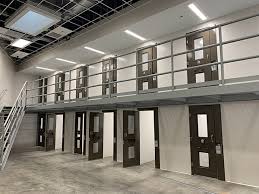
Behind every secure facility lies an unseen network of engineered hardware built to balance safety, function, and longevity. The standards shaping those designs never stay still. Prison supply manufacturers constantly revise, test, and reimagine their products to align with evolving safety regulations that protect both staff and inmates inside correctional environments.
Analyzing New National Safety Codes and Incorporate Changes into Product Design
Before any physical design begins, detention equipment contractors must interpret new national safety codes issued by organizations such as the American Correctional Association (ACA) and the National Institute of Justice (NIJ). These updates often introduce detailed requirements about strength, anti-ligature design, or fire resistance. Manufacturers respond by conducting thorough code reviews and risk assessments to determine how current product lines measure up.
Once those changes are understood, engineers integrate them into fresh designs or modify existing equipment accordingly. Security detention equipment contractors use this stage to ensure each hinge, latch, or locking system aligns with modern expectations for controlled access and personnel protection. This proactive adaptation prevents compliance issues during facility inspections and supports long-term operational safety.
Using Specific Products with Different Performance Levels for Evolving Standards
Correctional environments are not uniform; each facility type—from holding centers to high-security prisons—demands hardware that performs differently. Prison supply manufacturers often create product variations that meet unique safety thresholds. For example, hardware for modular jails may require adjustable reinforcement for relocation, while maximum-security detention center doors must sustain repeated impact without structural compromise.
Matching performance levels to facility needs ensures cost efficiency and safety without unnecessary overengineering. Detention equipment contractors test products under realistic conditions to confirm they meet required security classifications. This approach allows institutions to select the right grade of locks, frames, or hinges based on the intensity of use and the level of supervision required.
Design Items That Meet Specific ASTM International Standards for Safety
ASTM International provides detailed standards that govern testing, materials, and manufacturing processes across industries—including correctional hardware. These standards define criteria for durability, tensile strength, and tamper resistance. Prison supply manufacturers rely on these benchmarks to validate product performance before installation.
Meeting ASTM standards also builds confidence with architects and contractors who oversee detention construction projects. Certified compliance helps facilities prove that their chosen equipment meets or exceeds accepted guidelines. In a market where liability and security concerns intersect, consistent adherence to ASTM requirements represents both technical excellence and institutional responsibility.
Focusing on Engineered Reinforcement to Withstand Impact Forces
Correctional hardware must endure far more stress than traditional commercial fixtures. Doors, frames, and locks experience daily use under forceful conditions. To meet those demands, manufacturers design hardware with reinforced internal structures and precision-welded joints that resist bending or breaking under impact. Reinforced assemblies reduce maintenance costs and enhance facility reliability over time.
Testing plays an equally vital role in this engineering process. Security detention equipment contractor teams subject products to repeated impact, torque, and pressure to identify weak points. Data from these trials informs future design improvements, ensuring detention center doors, frames, and fasteners can handle the strain of years of heavy use without failure.
Integrating Modern Technology, like Electronic Locks, into Mechanical Hardware Systems
Electronic locking technology has become a key factor in correctional design. Modern detention facilities now combine electronic and mechanical systems to create hybrid solutions that improve both control and accountability. Integrated systems allow staff to manage access remotely while maintaining manual overrides for emergencies.
The shift to digital security doesn’t replace traditional hardware—it enhances it. By embedding sensors and smart controllers into reinforced mechanical locks, prison supply manufacturers achieve real-time monitoring of every door movement. This blend of technology and strength reduces the risk of human error and streamlines security operations inside correctional environments.
Using Durable Materials That Resist Corrosion or Breakdown over Time in Harsh Environments
Detention hardware operates in harsh conditions that include constant contact, temperature changes, and exposure to cleaning agents. For this reason, manufacturers select materials that resist corrosion and fatigue, such as stainless steel or powder-coated alloys. Material choice directly affects lifespan and safety performance across all hardware components.
Facilities like modular jails depend on long-lasting finishes and coatings to maintain integrity even after years of use. Security detention equipment contractors monitor how different materials react to moisture, friction, and chemical exposure. Durability testing ensures that hardware continues performing reliably without frequent replacement or costly repairs.
Ensuring Products Are Designed so They Cannot Be Removed or Tampered with Without Specialized Tools
Tamper resistance remains one of the defining challenges in detention product design. Every screw, bracket, and bolt must prevent unauthorized removal. Hardware is often built with concealed fasteners or customized locking heads that require specialized tools to access. These design features protect against dismantling and self-harm while maintaining easy access for authorized maintenance teams.
Manufacturers test tamper-proof systems under controlled conditions, simulating real-world attempts at interference. By anticipating how a fixture might be manipulated, detention equipment contractors create hardware that remains secure even under deliberate stress. This approach strengthens safety for both inmates and officers throughout the facility.
Providing Clear Specifications and Installation Details
A well-engineered product can still fail if installed incorrectly. That’s why prison supply manufacturers emphasize detailed specifications and installation instructions. These documents outline performance expectations, anchoring methods, and hardware compatibility to eliminate confusion during construction. Clear communication between contractors, architects, and facility managers ensures each piece fits as designed. Detention center doors, hinges, and locking systems perform best when installed according to manufacturer standards.
