


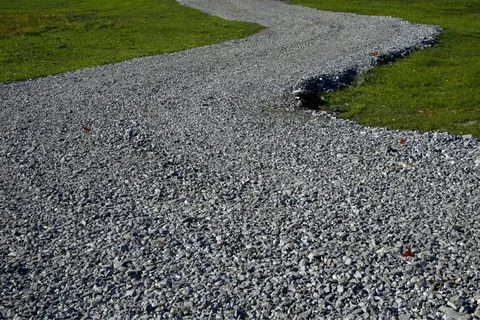
Rainstorms often expose the weaknesses of unprotected soil, especially on driveways, slopes, drainage paths, and construction sites. Larger gravel pieces help strengthen these areas by slowing down runoff and adding weight where it matters most. Homeowners, contractors, and property managers often rely on rock and dirt delivery to reinforce surfaces before major storms create erosion problems.
Larger Stone Gaps Slow Water Speed During Heavy Runoff
Large aggregate pieces naturally create wider gaps that act like built-in speed bumps for flowing water. Instead of rushing across soil and cutting channels, runoff filters through the openings at a slower pace. This reduction in speed helps keep the surface underneath intact during storms, especially in places where homeowners place gravel for sale to stabilize high-flow sections of their property.
Another benefit is improved distribution. Water spreading through large gaps moves more evenly across the gravel bed rather than picking a single path to carve. People using rock delivery near me services often learn that the right size stone can make a major difference in how well drainage paths hold up during repeated storms.
Dense Gravel Beds Anchor Soil and Reduce Surface Erosion
Larger gravel pieces weigh more, and that added mass helps hold loose soil in place. A dense gravel layer works like a protective shield, covering vulnerable areas that would otherwise wash away with a single storm. This approach is especially common on rural driveways, work sites, and hillside drainage corridors.
As water filters through the gravel bed, the soil beneath stays compact instead of breaking apart. This long-term anchoring effect supports areas where rock and dirt delivery plays a major role in keeping soil from thinning out over time.
Heavy Stones Resist Movement When Rainfall Intensity Spikes
Smaller stones tend to scatter once fast-moving runoff passes over them, creating uneven surfaces or washed-out paths. Larger stones remain in place because their added mass makes it difficult for flowing water to dislodge them. This is why contractors favor bigger rocks for sale in high-impact locations.
Another factor is friction. The rougher surfaces of larger stones interlock and resist sliding, even when water pressure increases quickly. This stability helps maintain consistent grading and prevents deep ruts from forming.
Bigger Rock Pieces Create Stable Channels for Controlled Drainage
Drainage channels lined with big aggregate pieces last longer because the stones shape the water’s direction instead of collapsing under pressure. Larger rocks guide water through predictable routes, helping prevent it from spilling into surrounding soil.
A well-designed gravel channel also spreads out heavy flows. Buyers searching for gravel for sale often choose larger sizes for this reason, as they create long-term pathways that stay functional even during back-to-back storm events.
Coarse Gravel Layers Keep Sediment from Washing Downstream
Sediment movement is a common issue in sloped landscapes. Large aggregate helps trap loose particles before they reach ditches, storm drains, or lower-lying property. This filtering effect reduces the amount of cleanup required after extended rainy periods.
Coarse gravel also works well in culverts, swales, and roadside edges. By keeping sediment where it belongs, it reduces future grading needs and supports stronger soil structure in areas that typically erode quickly.
Higher Mass Material Stays Put Where Lighter Fill Would Shift
Large gravel holds its position because heavier materials naturally resist shifting. That stability is essential for properties exposed to high-volume runoff or consistent flow patterns. Lighter fill moves easily, creating the need for repeated repairs.
Property owners often request rock and dirt delivery near me specifically for heavier gravel because it performs better under stress. This type of material is ideal for reinforcing weak spots where lighter stones or soil would quickly wash away.
Thick Gravel Bases Disperse Water Pressure Across Wider Areas
A layered gravel base spreads the force of incoming water so that no single point receives the full impact. This approach keeps channels from collapsing and prevents soft spots from forming in driveways or work areas. Contractors commonly build thick gravel pads before placing additional materials on top.
Traditional dirt or sand cannot handle high pressure the same way. A thicker base with larger stones creates a strong foundation that withstands repeated storms while maintaining proper drainage.
Large Aggregate Supports Stronger Footing in Saturated Zones
Bigger stones create firm surfaces even in areas that become saturated during severe weather. Footing improves because the material holds its shape instead of turning muddy or unstable. This is especially helpful in outdoor work zones, farm paths, and new construction sites.
These areas often rely on rock delivery near me services to add stability quickly. The larger rocks form a supportive framework that holds up under foot traffic, equipment movement, and prolonged wet conditions.
Property owners who want long-lasting erosion control, better drainage flow, and stronger ground reinforcement often turn to North Alabama Rock & Dirt for dependable aggregate solutions.
